
26.3.19
Pears are not apples

He had written and directed epochals such as: Once Upon a Time in Anatolia
or Winter Sleep.
or Winter Sleep.
Now Nuri Bilge Ceylan's The Wild Pear Tree
paints a fascinating portrait
of the struggle and resentment of Turkish youth,
resulting from lack of job opportunities
and crushing under the weight
and crushing under the weight
of family debts.
It’s a coming of age movie,
of someone who has already came of age.
It charts the growing pains of an artist,
and his search for belonging
in a world that feels
too small
for him.

Set in a small Turkish village,
The Wild Pear Tree follows a young man
The Wild Pear Tree follows a young man
who returns to his hometown
after graduating.
He wants to be a writer.
He wants to be a writer.
He has Already finished his manuscript,
and now
and now
he attempts to get it published.
He looks for local sponsors
He looks for local sponsors
and scrapes money of his own,
when he can’t find any.
But his father’s debts
when he can’t find any.
But his father’s debts
soon catch up with him.
Co-written & directed by Nuri Bilge Ceylan, the film is slow.
Patient.
Patient.
Methodical in its approach,
as expected.
as expected.

The entire film is an exercise in showing
rather than telling.
Told through the eyes of Sinan,
his writer’s imagination leads to dream sequences of heart-stopping proportions,
perfectly balancing
the real
with the fantastical.
It fits so harmoniously with the film
as a whole
as it never once disrupts
the flow of the narrative.
But the plot is a tad too drawn out.
Ceylan’s direction presents a certain level of comfort.
His sketching of the mundanities of everyday life
remain as captivating as always,
but they are also overly stretched.

The story ruminates on love,
fate,
morality,
religion,
unemployment & abandonment
fate,
morality,
religion,
unemployment & abandonment
through the eyes of our protagonist,
who often comes across as arrogant,
insolent & condescending.
Whereas it is a proper reflection of young adults
who reject the wisdom & advice of previous generations,
consider themselves morally superior to others,
consider themselves morally superior to others,
and think they know how the world works,
until life knocks some sense into them.
However,
it is the father-son relationship
it is the father-son relationship
that the film bases its narrative on.
This aspect is finely executed,
keeping our interest alive
until the end
until the end
with their love-hate dynamic.

The static camerawork allows room for more thoughts
and follows our protagonist at all times.
Yes its 188 minutes runtime is excessive,
and its severity is felt
sooner or later.
sooner or later.
Editing is a mixed bag too,
for the jump cuts are jarring
while several extended segments
end abruptly.
end abruptly.

All the actors are committed to their roles,
play their part responsibly
& are thoroughly convincing.
& are thoroughly convincing.
Even the supporting characters with limited screen time
exhibit sufficient depth,
thanks to excellent writing
& lifelike characterisation.
& lifelike characterisation.
Ceylan provides ample space
for primary characters to breathe
for primary characters to breathe
yet their arcs appear stifled
for the most part
for the most part
before coming full circle
in the end.
in the end.

On an overall scale,
The Wild Pear Tree provides an interesting glimpse into the life of modern Turkey,
The Wild Pear Tree provides an interesting glimpse into the life of modern Turkey,
and makes for an absorbing character study
of a young man
of a young man
who finds himself being dragged towards a destiny
he cannot embrace.
While there are moments
that present the esteemed Turkish auteur
in control of his craft,
there are also times
when he slips up
and allows few segments
to either go on for too long
to either go on for too long
or cuts before they have run their course.


Everything about this film works out
to create something unbearably real,
hard to watch
but harder to look away.
It’s a honest portrayal of the artist
and their place in the world,
in the worlds we create
and the worlds we exist in.
The Wild Pear Tree is a must-see for everyone,
but particularly for artists,
young and old.
From its message to its crafting,
you’ll walk out feeling understood,
not alone
and maybe even inspired.

Giulia Dobre
22.3.19
Serotonine toi-meme
Et in
arcadia ego
(Literatura
sau arta de a privi realitatea in fata)

4 ani dupa
marele scandal – si succes- cu “Soumission”, ‘Serotonine” revine la esenta lui
Michel Houellebecq.
Anume la un concentrat de ironie depresiva intr-o Franta in
criza.
Persoanele
mai in varsta au avut poate ragazul de a se fi informat asupra acestui cuvant
bizar care da tiltul ultimului roman al lui M.H.
Ceilalti stiau probabil deja,
din practica joggingului, din consumul drogurilor, sau din ambele, ca
serotonina mai este numita si “ proteina fericirii”.
Comentatorii
au subliniat pana acum cu culori fluorescente legaturile romanului cu actualitatea
imediata.
In absenta oricarei burka, ei au apropiat romanul de evenimentele cu
gilets jaunes.

Sa fi virat Houellebecq
in orientarile sale politice? Se vor fi intrebat comentatorii, pana sa inteleaga,
poate, ca defapt problema statea in lectura lor mot-a-mot a romanului“Soumission”
…


“Serotonine”
are bunul simt de a nu mai adauga nimic senzational poemului epic
houellebecquian. Temele sale uzuale se regasesc aici intocmai, desfasurate
intr-un soi de road-trip restrans existential la dimensiunile Normandiei.
Barbatul se
numeste de aceasta data Florent-Claude Labrouste, si este inginer agronom-
precum Houellebecq.
Pentru a-i vindeca depresia, doctorul ii prescrie un nou
medicament, Captorixul, care are inconvenientul de a lasa impotent.
Traiesti,
da, dar nu-ti mai doresti nimic: o dilema eminamente moderna.
Si totusi.
Florent-Claude nu este pregatit sa renunte.
Drept care
va da un tur pentru a-i revedea pe putinii oameni pe care i-a iubit: o fosta
amanta, un prieten de la Agronomie, sau iubirea lui cea mare. Va traversa deci
o Franta a satelor minuscule, in mod cert mai exotica decat insulele
thailandeze.
Bineanteles
ca exista aici un anumit comentariu politic, in acest portret al Frantei rurale
in criza.
Dar povestea
e terminata, gata: cargourile aduc deja lapte din Argentina, gainile sunt torturate
in minuscule habitacluri, iar agricultorii francezi, ultimi descendenti ai
nobililor din Evul Mediu, se sinucid o zi in doua.

Deci e de
dreapta sau de stanga?
Reactionar
sau revolutionar?
Cu toate
acestea, repertoriul scriitorului de fraze laconice despre atractia minusculelor
pizdute thailandeze, despre nudistii olandezi sau extazul din supermarket, e
cam rasuflat.
Ramane
amuzant-pentru ca ramane adevarat.
Insa “Serotonine”
este, poate, romanul de dupa umor.
Este mai
degraba romanul trecerii cartre moarte.
Iar
Houellebecq stie sa moara incetul cu incetul.
Lentoarea,
deriva, poezia lui “as fi preferat sa nu”, dau romanului sarm si spleen.

Finalul urca
puternic, calare pe caii albi ai unui elan liric care, precum adesea la Houellebecq,
ezita intre grandilocvent si trivial.
Autorul este aici din nou impartit intre trivialitatea sexualitatii umane, si un
ideal romantic foarte pur, rar si frumos.
Dar prostititutia,
precum turismul, si-au pierdut atractivitatea in ochii lui, si naratorul nu se
mai excita deloc.
Iar poezia
nu-si mai face aparitia decat rapid si rar, o data ce povestirea s-a cam
terminat.

Ar mai
trebui vorbit si despre ciudatul episod pedofil din inima cartii.
Fara a
dezvalui prea mult, sa spunem ca naratorul nu isi extrage de acolo nici-o placere
sexuala, ci se concentreaza mai degraba pe aspectele tehnice.
Noi, ca
cititori, trebuie sa ne intrebam la ce anume serveste acea scena.
La ce altceva
decat la o clarificare radicala a functiei scriitorului.
“Nu va voi
denunta!”, urla personajul de mai multe ori.
A vedea, a
descrie cu exactitate abjectiile si gratia fara morala a unui sex de fetita,
fara emotie, fara a denunta, fara a face pe justitiarul:
iata un program
literar foarte clar.
Bineanteles
ca personajul une carti nu trebuie confundat cu autorul sau.
Si totusi, “Serotonine”
este in acelasi timp povestea unui om care scrie o carte, o metafora a muncii
scriitoricesti.
Finalul ne indica
ideea de marturie in sens crestin.
Este vorba
despre povestea unui martir, care se cere privita atent de catre cititor.
Imposibilei
comuniuni umane,
autorul o propune pe aceea, provizorie si fragila,
a cartii ca
mijloc de a privi lumea.
Si de a dispera impreuna.

Giulia Ghica
Dobre
9.12.18
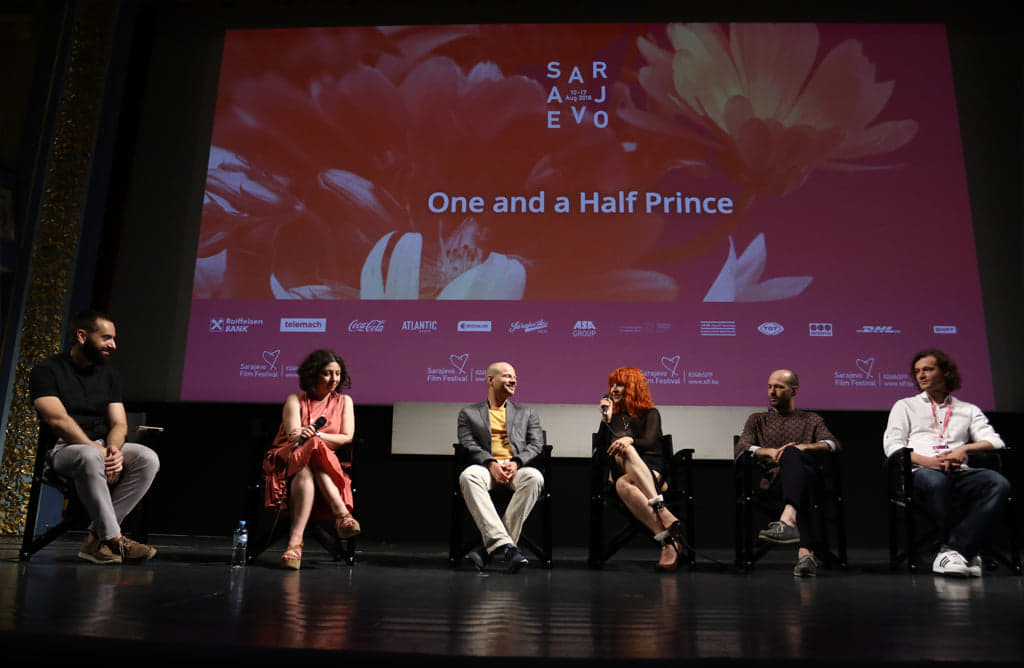
Un jour mon Prince viendra: One and a Half Prince the romanian hype

The form of this film is technically a romantic comedy,
albeit a particularly straight-faced one.
Yet there are plenty of moments that elicit a smile,
but not in an outright funny manner.

" One and a half Prince" presents relationships with no hint of movie conventions.
As this film has an instinctive realism,
an ear for the way real people talk and interact.
It possesses a knack for drawing multi-layered
It possesses a knack for drawing multi-layered
and always drwas appealing performances out of its cast.
Here characters talk and talk,
frequently about their emotions and what they want.
frequently about their emotions and what they want.
It remains though necessary to read between the lines,
to pick up subtle cues,
to understand that what they say they want
is not necessarily
is not necessarily
what they actually want.

Ana Lungu lays bare the romantic complications of a young actress and three men,
two friends and a potential lover,
with consummate skill.
She turns the film from a conundrum to a poetic,
free-flowing treatise
on relationships and connections.
on relationships and connections.

"One and a Half Prince" is shot in a naturalistic and minimalist style.
What more appropriate expression for its organic,
unhurried
and unrehearsed quality?!

It has long stretches of dialogue that unfold,
performed with effortless ease by the cast
performed with effortless ease by the cast
( Iris Spiridon, Matray Laszlo, Istvan Teglas, Marius Manole)
and it reminisces of Richard Lanklater or Eric Rohmer.


The characters eat, drink, travel, pay visits to cemeteries,
seemingly carefree and revelling in their youthfull age.
But they also indulge with sincerity
in their emotional insecurities.
Which are exactly ours.
One may accuse " A one and a half Prince" of being circular,
meandering
and ambiguous.
and ambiguous.
But this is a film whose sum
is more than its parts.
is more than its parts.

And it articulates deftly the uncertainty of loving someone
—and being loved in return.
Yet,
it is also about embracing the future
as life charts its own course.

Giulia Dobre
4.12.18
My first reviewed Lanthimos: THE KILLING OF A SACRED DEER

From the director of Dogtooth & The Lobster comes another weird,
whacky & wicked concept.
Unravelling its plot with patience,
with an air of mystery & a sense of foreboding,
infused with a warped sense of humour,

The Killing of a Sacred Deer is a crazy, demented & uncomfortable psychological horror
that’s consistently engaging,
thoroughly unnerving
& fiendishly amusing.

The story follows a cardiac surgeon
who secretly develops a deep & empathetic bond with a teenage boy,
acting as a father figure to the young kid with whom he shares a past connection.
The two even invite each other to meet their respective families
and all appears to be going well for the time being.
Things, however, take an unexpected turn
when one of the surgeon’s kids falls mysteriously ill one day,
but if he is to save his family, he must confront a past mistake and make an unthinkable sacrifice.

Co-written & directed by Yorgos Lanthimos,
The Killing of a Sacred Deer is as bizarre as his previous works.
Lanthimos takes his time to set up the premise.
He focuses on establishing the secretive relationship between the surgeon & the young kid
without offering any details about the origin of their bond.
Nevertheless, an uneasy feeling is detectable in those moments, clearly conveying that something is about to go wrong.

The script packs a simple, straightforward revenge plot
but what makes it such an intriguing sit
is its peculiar tone & ominous vibe.

Character interaction is zany, lines are spoken with deadpan expression,
and it brims with a discomforting quality.
Its eccentric wit is another element that makes you laugh & feel disgust at the same time.
It has a very polished look & feel.
Cinematography encapsulates the film with a sinister atmosphere.
Camera is manoeuvred in a very controlled fashion.
Its use of colour palette & excellent lighting is worth a mention as well.
Editing keeps things tense & gripping throughout its 121 minutes runtime.
The film features a faithful cast in Collin Farrell, Nicole Kidman, Barry Keoghan, Raffey Cassidy, Sunny Suljic & Alicia Silverstone, and all of them play their idiosyncratic characters with sincerity.

On an overall scale,
The Killing of a Sacred Deer is as fascinating & compelling as it is disturbing & surreal.
The film is not without its shortcomings though, f
or there are moments that linger on longer than required,
and few dialogues exist only for their effect instead of serving the plot.

I found it more accessible & involving than Lanthimos’ last film which for me was dull & sterile.
Those who are familiar with the director’s filmography know what to expect.

As for the newcomers, they are in for a hellacious ride too.
A deranged, haunting & upsetting delight, The Killing of a Sacred Deer is worth your time .

giulia dobre
Subscribe to:
Posts (Atom)